Home
Blog & Expertise
Standards

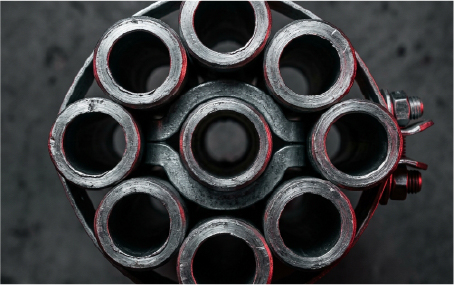
very length of EMT you buy is made to a standard — ANSI C80.3. It fixes the outside diameter, the wall thickness and how far each can vary. Get familiar with those three numbers and a spec table stops being a wall of digits and starts telling you exactly what will happen on site.
The standard exists so that a connector from one maker seats on tubing from another, and so that a bender set up for a given size produces a repeatable result. When the dimensions drift, fittings bind, offsets spring back unpredictably and inspectors start asking questions.
For any trade size, a C80.3 table gives you the nominal outside diameter, the nominal wall thickness, and the tolerance band around the O.D. Here’s a slice of the EMT range so you can see how they scale:
Notice the wall doesn’t grow in lockstep with diameter — it steps up in bands. That’s why a 2″ and a 1-1/4″ can share the same wall thickness while their diameters differ significantly.

Latius iam disseminata licentia onerosus bonis omnibus
Tolerance Isn’T Slack In The Product — It’S The Promise That
Every Piece Falls Inside A Known Window.
C80.3 tightens or loosens the allowed O.D. variation by size. Smaller conduit is held to a few thousandths of an inch; the largest sizes get a slightly wider band because they’re harder to form to the same absolute precision. A typical set of bands looks like this:
Confirm the standard on the datasheet, verify the length and its tolerance, and make sure the finish suits the environment. If any of those are missing from a supplier’s table, that’s your signal to ask. You can always pull the full figures from our specification tables or the EMT product page.
Let's build it together.
REQUEST A QUOTE